Wine Technology Innovations Transforming the Modern Winery
Precision viticulture, AI-driven fermentation modelling and blockchain provenance become table stakes at the premium tier.
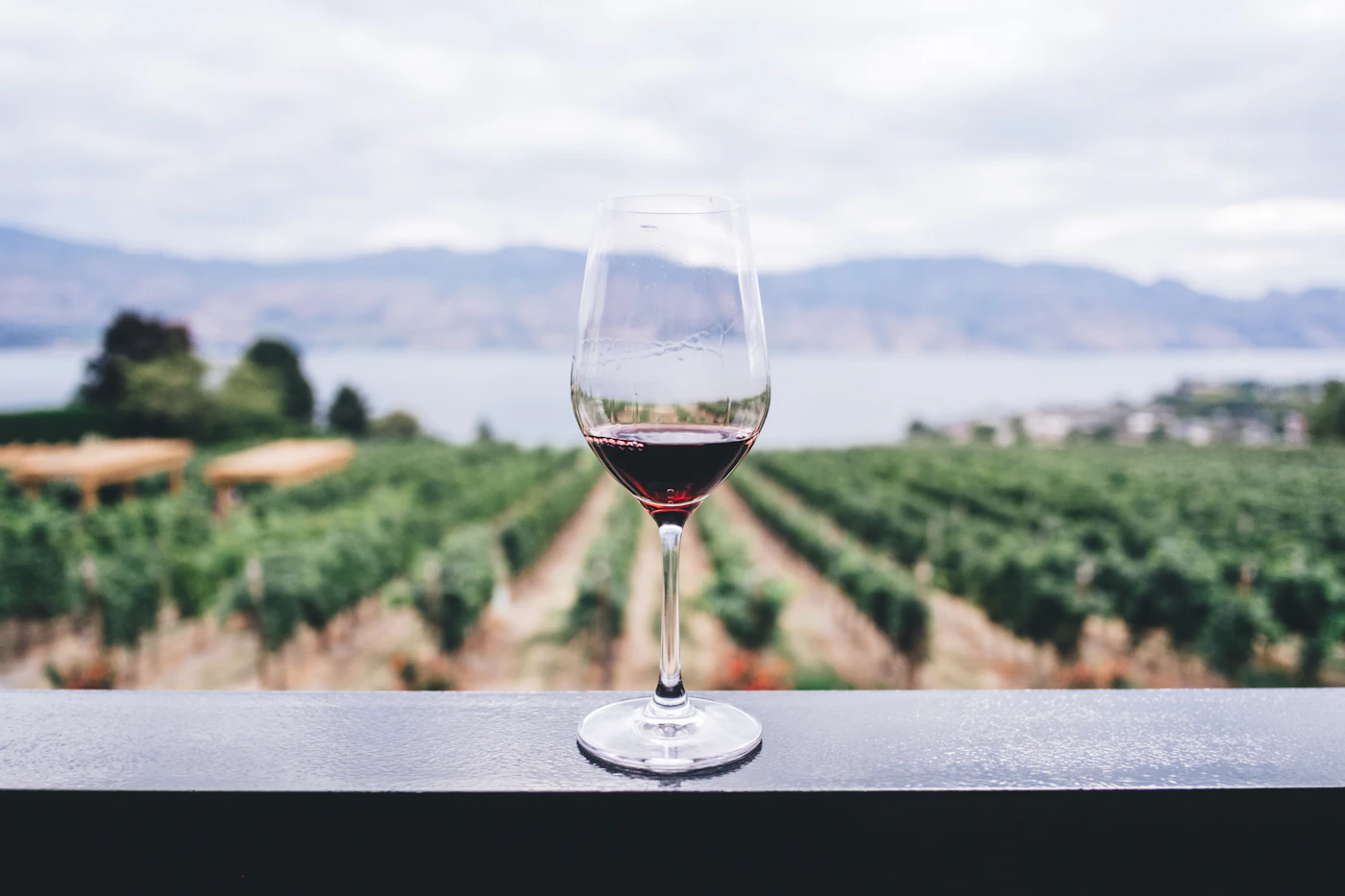
At Château Pichon Baron, satellite-fed vigor maps now guide harvest decisions row by row. In Sonoma, ambient sensors flag stuck fermentations 36 hours before a cellar master would notice. And in a warehouse outside Bordeaux, NFC-tagged capsules record every temperature excursion between bottling and final sale.
The premium wine industry is compressing a decade of technology adoption into three years. The forces driving that compression — climate volatility, labor scarcity, provenance risk — are not going away, and the estates investing now are building durable operational and quality advantages over those that wait.
Precision Viticulture: From Row to Vine
Precision viticulture — the use of satellite, drone and in-canopy sensor data to manage vineyards at increasingly granular resolution — has moved from experimental to operational at the premium tier. Estates that adopted these tools in the late 2010s report yield variance reductions of 18–25%, translating directly into more consistent bottle quality across vintages.
The workflow at a modern top estate now begins with weekly satellite passes measuring vine vigor across the property. Those images are cross-referenced with soil moisture data from wireless probes, and the resulting maps guide everything from canopy management to selective harvest passes. On the best-managed properties, individual rows within a single parcel may be picked days apart based on measured phenolic maturity.
The quality dividend shows up in wine that better reflects the underlying site rather than the vintage's noise. That is a subtle but genuine change in how the top of the market tastes over time — and, importantly, it is not something a competing estate can replicate quickly without years of accumulated data.

AI in the Winery
The most consequential AI applications in the winery are unglamorous. Fermentation modeling — feeding tank temperature, density and yeast metabolism data into a purpose-trained model that flags anomalies before they become problems — has delivered measurable spoilage reductions at every producer that has taken it seriously.
One 40,000-case Napa producer reported a 63% reduction in spoilage risk after eighteen months on a bespoke fermentation model, with a full payback on the tooling investment inside two years. Similar results have been published by producers in Priorat, McLaren Vale and Elgin. The pattern is consistent: the technology delivers concrete operational returns before it delivers headline quality gains.
Blend optimization is a second high-impact application. Rather than replacing the winemaker's judgment, modern blending tools present a multi-dimensional map of possible cuvée compositions, flagging blends that match a target profile within tighter tolerance than manual iteration would achieve in the same time. The winemaker still chooses; the software just widens the field of view.
Editorial view
AI in wine is not about replacing the palate — it is about giving skilled winemakers more useful information faster. The best implementations are boring.
Blockchain Provenance
Tokenized chain-of-custody is now standard on new releases from more than 40 premium producers. The typical implementation combines NFC-tagged capsules with a blockchain-anchored ledger that records every custody transfer from bottling through final retail sale.
For collectors and institutional buyers, the value is straightforward: authentication risk on new releases drops to effectively zero when the provenance chain is intact and verifiable. That verification premium is already visible in secondary market pricing, with tokenized bottles trading at modest but consistent premiums over untagged equivalents from the same producer and vintage.
The technical implementation matters. Systems that anchor to a public chain with reasonable data availability have longer credibility than proprietary implementations tied to a single vendor. Producers evaluating options in 2026 should prioritize open standards and long-horizon durability over feature richness.
Sustainability Technology
Sustainability is where operational and reputational returns overlap most cleanly. Water use is the most visible metric: early-adopter vineyards report roughly one-third reductions in irrigation volume since 2020, primarily driven by smarter deficit-irrigation strategies informed by real-time canopy stress data.
Energy is a slower story but a meaningful one. Solar canopies over tank yards, heat-recovery systems on cooling loops, and grid-tied battery storage sized to shave peak demand are all now paying back within five to eight years at commercial electricity prices. Several estates in southern France are approaching net-zero on cellar-side energy without sacrificing operational reliability.
The narrative dividend is real but should not be overstated. End consumers say they care about sustainability more than their purchasing behavior demonstrates. The stronger case for these investments is operational: they reduce input volatility and lower long-term costs, and the marketing story is a bonus rather than the primary return.

The Economics of Adoption
Payback periods for major wine-tech investments have compressed to three to four years for well-scoped implementations. That is a meaningful change from the seven-plus years typical a decade ago, and it reflects both falling hardware costs and better packaged software for mid-sized estates.
For a 30,000–80,000-case producer, a realistic annual technology budget sits in the $150,000–$400,000 range, covering precision viticulture tooling, cellar telemetry, provenance systems and the analytics stack tying them together. Below that scale, shared-service providers and estate-management platforms deliver credible outcomes at lower cost.
The estates that outperform on these investments treat them as a system rather than a shopping list. Data from the vineyard flows into cellar decisions; cellar telemetry informs blend choices; provenance records close the loop from bottle back to parcel. That integration is where the durable operational advantage lives.
Typical annual tech budget by estate size
- Under 10,000 cases: $30,000–$80,000 via shared platforms
- 10,000–30,000 cases: $80,000–$150,000 mixed stack
- 30,000–80,000 cases: $150,000–$400,000 fully integrated
- Over 80,000 cases: $400,000+ with custom tooling
What's Coming Next
Three developments deserve attention over the next 24 months. First, agentic AI systems that plan multi-week vineyard operations end-to-end are moving out of pilot at a handful of large estates. Second, spectral imaging at berry-level resolution — currently research-grade — is on track to become commercially viable inside two years. Third, consumer-facing provenance interfaces are converging on a small number of shared standards, which will accelerate secondary market adoption.
None of these will meaningfully change how great wine tastes. What they will change is how consistently top estates produce it, and how much of the underlying quality story a buyer can verify before opening the bottle. Both of those matter enormously to the collector market, and both compound over time.
What Winery Technology Actually Costs — and When It Pays Back
Every technology conversation in wine eventually collides with a spreadsheet. A multispectral drone survey programme, canopy sensors and a cloud analytics subscription typically land somewhere between €250 and €900 per hectare per year depending on flight frequency and whether the estate owns or contracts the hardware. For a 15-hectare Grand Cru estate where a single percentage point of quality classification changes the release price materially, that payback arrives within a season. For a 300-hectare bulk producer, the same package only makes sense if it reduces water, fuel or spray passes at scale.
Optical sorting and inline spectroscopy follow a similar logic. Capital cost is significant, but the operating benefit — fewer rejected lots, tighter phenolic control, lower sulphur additions — accrues every harvest. The strongest business cases we have reviewed pair hardware investment with disciplined data governance: an estate that captures ten seasons of block-level data owns something a competitor cannot buy. Our case study on AI fermentation modelling shows what that dataset is worth once it is long enough to train on.
Traceability technology is the category with the clearest commercial return, because it protects price rather than reducing cost. Tamper-evident NFC closures and registry-backed provenance records reduce counterfeit exposure in exactly the segment where counterfeiting is profitable — the same segment discussed in our guide to rare wine auctions. Meanwhile the sustainability instrumentation covered in our report on sustainable viticulture in fine wine increasingly doubles as compliance evidence for retail buyers who now demand audited carbon and water data.
Before committing capital, read the primary agronomic literature rather than vendor case studies. The OIV publishes resolutions and technical reviews on vineyard practice and analytical methods, and the University of California, Davis Department of Viticulture and Enology makes a large body of peer-reviewed research on irrigation, canopy and fermentation management freely available.
Indicative annual cost by technology tier
- Entry tier — weather stations, soil moisture probes, mobile record-keeping: €40–120 per hectare.
- Mid tier — drone or satellite imagery, variable-rate application, cloud analytics: €250–500 per hectare.
- Advanced tier — inline spectroscopy, optical sorting, predictive fermentation models: capital cost from €120,000.
- Traceability — NFC or tamper-evident closures with registry hosting: €0.15–0.60 per bottle.
Frequently Asked Questions
How is AI used in premium winemaking today?
Premium producers use AI mainly for fermentation monitoring, blend optimization and predictive maintenance on cellar equipment. Fermentation models trained on years of tank telemetry flag anomalies before they become spoilage, while blending tools help winemakers explore composition options faster without replacing final judgment.
What are the best precision viticulture platforms for 2026?
The leading platforms combine satellite imagery, in-canopy sensor networks and analytics tuned for wine grapes. Selection should be driven by data ownership terms, integration with existing estate management software, and demonstrated experience in the buyer's specific climate and varietal profile rather than headline feature counts.
How does blockchain provenance work for fine wine bottles?
Producers pair NFC-tagged capsules with an immutable ledger entry at bottling, then record custody transfers at each step through distribution to the end buyer. The result is a verifiable end-to-end provenance chain that buyers can audit before purchase, reducing authentication risk for new releases to effectively zero when the chain remains intact.
How much can water use be reduced in modern vineyards?
Early-adopter vineyards using real-time canopy stress data and deficit-irrigation strategies report reductions of roughly one-third in irrigation volume since 2020. Actual results depend heavily on climate, soil and varietal, but the direction of travel is consistent across every serious implementation reviewed.
What are recent case studies on smart fermentation monitoring?
A 40,000-case Napa producer documented a 63% reduction in spoilage risk within 18 months of deploying a bespoke fermentation model, with full payback in under two years. Comparable results have been published by producers in Priorat, McLaren Vale and Elgin, reinforcing the consistency of the operational returns.
Continue reading on WineGrey News
Sources & further reading
The Weekly Cellar Note
Market data, auction results and vintage reporting, delivered every Thursday.
Premium Collector's Guide
Our in-depth primer on building, storing and eventually selling a fine wine portfolio.
Read the guide
